you envision Germany, what comes to mind? Is it the delectable sausages, the breathtaking landscapes, or the precision of German engineering? Beyond these iconic hallmarks lies a captivating aspect of German culture: traditional German clothing. These outfits are not mere garments but living testaments to a bygone era, serving as a portal into Germany's rich history, culture, and the resilience of its people.
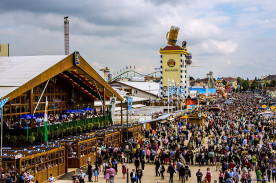
From the rugged charm of lederhosen to the graceful allure of dirndls, Germany's traditional clothing resonates with a sense of pride and celebration, particularly during Oktoberfest. This famous festival offers a visceral experience, immersing you in the camaraderie and customs of German heritage, where lederhosen and dirndls become symbols of unity and revelry. As we delve into this cultural journey, we'll explore the origins, significance, and enduring appeal of these iconic oktoberfest outfits and regional oktoberfest costumes, uncovering the stories woven into every stitch.
The Rugged Charm of Lederhosen
A Lederhosen history: Origin as working-class attire to a symbol of masculinity and heritage.
Lederhosen were never intended to be a traditional costume. Rather, they were created as work wear for peasants. For centuries, Germans had already been using leather to make clothing articles such as boots. Leather was a good high-endurance material for laborers and farmers to wear in demanding work conditions.
In the 16th century, French culottes (or knee breeches) started to popularize throughout Europe. The French made their clothes from softer fabrics, as the culottes were used for leisurely and aristocratic apparel. By the 18th century, German and Austrian workers in the Alps took the culottes style for their own use. But instead of using the soft French fabrics, they went with their trusty leather. Thus, the lederhosen styles, which literally translates to "leather breeches", was just culottes made out of leather!
Although the outfits were made for mountain and country-dwelling peasants, upper-class Germans eventually found the lederhosen to be sensible attire for outdoor activities such as horseback riding and hunting. Additionally, it became fashionable for noble society to emulate peasant style during the 18th century. Lederhosen worked their way up to courtly society while still being used by peasants. This resulted in lederhosen being the universal German attire.
In the 19th century, pantaloons and trousers began to take the place of culottes in European fashion. Since nobilities now had a new trend to follow, their interest in lederhosen dropped sharply. The lederhosen were then seen, again, as peasant clothing that was unfit for city dwellers. As for country workers, lederhosen german were eventually outsourced by a different invention: jeans. Jeans not only caught on for working purposes, but younger generations recognized them as a hot American fashion trend. From all of these factors, lederhosen were weeded out of the necessary apparel for German life.
But just as lederhosen traditional started to become irrelevant, their revival for costume purposes started. In the 1880s, Munich began founding clubs dedicated to preserving Bavarian culture. The biggest factor was Oktoberfest, which announced in 1887 that lederhosen and dirndls would be the official garb for the attendees. Today, that rule still applies. The view of lederhosen as the quintessential Bavarian outfit originated during this revival. Much like the kilt in Scotland, vintage lederhosen have become a cultural stamp for German history.
Different styles of Lederhosen: Knee-length, calf-length, and variations based on region.
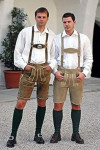
Lederhosen are short or knee-length breeches made of leather. Traditional lederhosen are hand made of tanned deer leather which makes the pants soft and light but very tearproof.
All variations usually consist of two side pockets, one hip pocket, one knife pocket, and a codpiece (drop front).
Formerly, lederhosen were worn for pheasant work among men of the Alpine and surrounding regions, including Bavaria, Austria, the Allgäu, Switzerland, the autonomous Italian region of Trentino-Alto Adige/Südtirol (formerly part of Austria-Hungary) and Alpine area of today's Slovenia.
La Couturière Parisienne, however, claims that lederhosen was originally not exclusively a Bavarian garment but was worn all over Europe, especially by riders, hunters, and other people involved in outdoor activities.
The drop-front style became so popular in the 18th century that it was known in France as à la bavaroise, "in the Bavarian style".
Lederhosen Style | Description |
|---|---|
Knee-length | The classic length, stopping just below the knee when standing. |
Over-knee | Extending slightly over the knee, providing more coverage. |
Full-length | Falling on the shoe at the ankle, resembling trousers. |
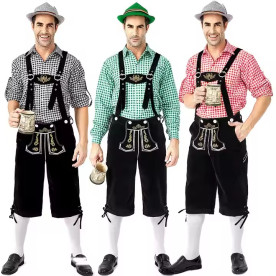
There isn't only one single type of lederhosen, though. They range from short through over-knee to full-length and, although they generally feature a flap over the flies and the classic matching braces joined at the chest by a strap, they may also look quite different; one thing almost all traditional lederhosen feature is decorative embroidery.
How to wear Lederhosen: Choosing the right fit, traditional accompaniments (shirt, suspenders, socks).
Knowing how to wear lederhosen helps you choose one that fits your body correctly. This is the first step in having a great traditional Bavarian outfit to wear. When buying Lederhosen, you must keep in mind what style you want. The two most common and widely recognizable lengths are the Kneebund, which sits just below one's knee when standing, and the shorter length which ends just above the knee .
While knee bound offers slightly more protection in colder weather, the choice of length is mostly down to personal preference. However, whichever length you do decide to go with, do not forget that they should end just above or just below the knee, too long or too short means that the lederhosen do not fit and you need to try a different size .
A lot of people want to know how to properly wear lederhosen. Correctly accessorizing is just as important. After you have decided on your pair of Lederhosen, it is time to accessorize them. A pair of lederhosen accessorized correctly can make you the star of the show. But if it is done incorrectly, it can quickly turn into a disastrous affair.
The main accessories to worry about for Lederhosen are the shirt, shoes, and socks. Although some people also pair a Tyrolean Hat with their outfit, this is a flashy piece that is not common. Therefore, it is advisable to avoid adding this piece until you have the handcrafted Lederhosen styling down.
When questioning what kind of shirt do you wear with lederhosen, a checkered or a white long sleeve button-up is the way to go. They traditionally have a button along the upper arm of the sleeve for rolling and pinning the sleeves up. You can find the checkered shirtin many colors, but the most widely seen colors are red, blue, and green.
While you can pair almost any color that you can find with this outfit, consider your partner. If you plan to attend with a partner, match your shirt color to their dirndl for a stunning couple's look .
Another important choice to make is what kind of shoes do you wear with lederhosen. Avoid wearing sneakers if at all possible and opt instead for a pair of Haferlschuhe. This traditional footwear is great for bringing cohesion to the whole outfit but do your best to match the leather color to that of your lederhosen .
While brown Haferlschuhe with matching brown Lederhosen looks sharp, trying to go crazy with alternating colors can leave you looking like a disheveled and unplanned mess .
As for socks, there are two main styles that you can choose to accessorize your nearly complete outfit. You can opt for the longer Haferl socks or the short Loferl sock paired with calf warmers. You can keep them up in cold weather or scrunch them down towards your ankle to let your leg breathe. For Loferl socks, you can find calf warmers with minimalist color and design, or go bolder with patterns or designs. A common design found on calf warmers is a checkered pattern.
Lederhosen with suspenders are preferred to complete a traditional German attire look. The main purpose of suspenders is to provide perfect fittings or adjustments to the trousers, ensuring they fit right in place. In addition, they have suspenders in different colors with multiple unique embroidered designs on them. You can pair the suspenders with your trachten shirts or bundhosen to create your attire look .
The dress for Oktoberfest – what is a dirndl?
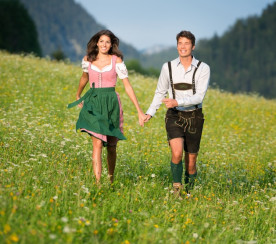
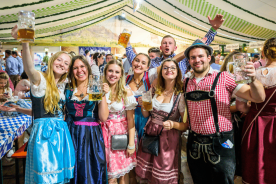
dirndl is a quintessential part of traditional German women's clothing, and its styling varies by region and occasion. A traditional dirndl typically consists of a blouse, skirt, and apron.
The dirndl dress
The Dirndl has a long and interesting history. It originated in the Alpine regions of Austria, Germany, and Switzerland as a traditional dirndl dress for women. The style is believed to have been around since the 19th century, but it gained more widespread popularity during the 1960s. Since then, it has become a popular fashion trend all over the world.
The Dirndl is a knee-length dress with a natural waistline and full skirt. It usually features buttons, bows, ribbons and other decorative elements. The traditional look also includes an apron that is often ornately decorated. Short-cut dirndls are not only for tourists; there are also short Dirndl variants that locals can wear. Knee-length dirndls, for example, are very trendy. With this midi length, the view of the "Wadln" ("calves") is free, but it cannot be considered "too short". Despite everything, attention should be paid to the length. Really short dirndls quickly turn out to be impractical.
The dirndl apron
A traditional dirndl apron is a piece of clothing that covers the front part of your torso from chest to hip and covers the dirndl skirt. It's usually made from cotton, linen, or silk and can be styled with traditional dresses like dirndls. One of the most important accessories to the Dirndl is, of course, the apron. It makes the Wiesn outfit perfect. Oktoberfest professionals have several models in their wardrobe that match the color and design of the dirndl. The apron is the right length when it matches the hem of the dirndl.
The fabric you choose for your Dirndl apron makes all the difference. Popular materials include silk, lace, and cotton. Depending on the look you're going for, a heavier fabric such as velvet or flannel will give you a more traditional feel, while lighter fabrics are better suited to a modern effect. Investing in quality fabric such as silk, lace, embroidered, or jacquard can give your apron an extra special touch and make it look more exquisite.
There are many traditional designs to choose from for dirndl aprons, ranging from floral patterns to geometric shapes. You can also find modern takes on the classic styles, like polka dot and gingham prints. While black and white are seen as the traditional color of choice for dirndl aprons, you don't have to stick to the classic look. Dirndls started out as a traditional German outfit and today come in an array of colors, from bold reds to rich purples. You can also find Dirndl aprons in more muted colors, such as beige and gray, if you're looking for something subtle. Try adding a pop of color with a bright yellow or vibrant blue, or opt for something timeless and neutral.
The dirndl blouse
The blouse is traditionally worn beneath the Dirndl and is typically available in white, ivory or black. Depending on the event, your personal style or even the weather, you can switch up your blouse to suit any look! A fun off-the-shoulder blouse is great for warm days, but the sweetheart puff sleeve is definitely the most popular blouse.
Traditionally, the ladies at the Oktoberfest wear white blouses with their Dirndl, but times have changed. Nowadays, you can see blouses in a wide variety of colors and materials. Allowed is what pleases. Nevertheless, some aspects should be considered when choosing a Dirndl blouse. If the Dirndl is colorful, a restrained blouse model is recommended. On the other hand, an eye-catching blouse is absolutely suitable for a rather plain dirndl. Classic blouse models emphasize the décolleté in a tasteful way. If that's too much for you, you can opt for high-necked models. These are also very much in vogue. Also trendy: blouses made of delicate lace, simply cut and with a rather restrained neckline.
Beyond Lederhosen and Dirndl: Exploring Regional Dress
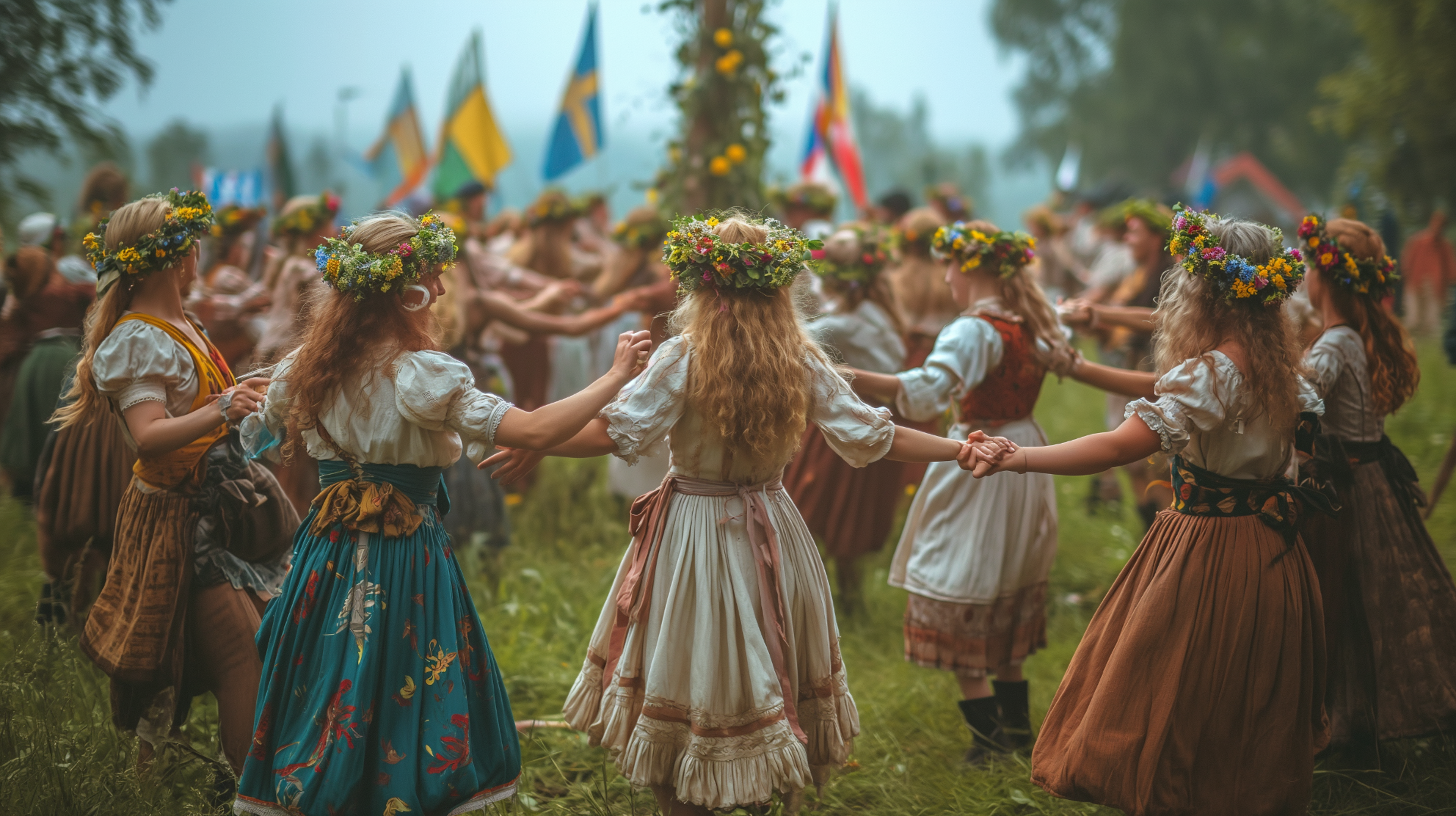
is a very regionally distinct country. Until relatively recently with the formation of the modern German state and German unification, the regions and peoples that made up Germany today were and continue to be quite different. Germany's complex history, geography, religion, and economic development have preserved much of the regional diversity despite having a unified language and government for many generations now.
Briefly mention other regional outfits worn during festivals and celebrations across Germany.
Historically, Germany's division into several states until the late 19th century led to the formation of unique regional identities, each with its own traditions and cultural practices. The physical geography of Germany plays a large role, with the mountainous regions in Bavaria and Baden-Württemberg having different climate and terrain than the flat plains in the north. Religion has also shaped regional identities, with the Protestant and Catholic denominations historically concentrated in different regions. Finally, economic development has contributed to regional differences, with the west of Germany being more industrialized and urbanized than the east, which has a more rural and agricultural economy.
Carnival takes place in many regions of Germany, Switzerland, and Austria with different traditions. While traditional clothes worn on these occasions are regional and strongly influenced by local beliefs and customs, they are actually casual clothes, and not based on workwear and or history.
Include some examples: Trachten (Austrian variant of Dirndl), Friesennerz (fur coat from North Frisia).
- The Black Forest women's Trachten is a traditional clothing style worn by women in the Black Forest region of Germany. It typically consists of a blouse, a corset or bodice, and a full skirt that falls to the knee or slightly below.
- The traditional costume or Tracht of Franconia, also known as Fränkische Tracht in German, varies depending on the specific region within Franconia. In general, the costume for women includes a colorful and often elaborately embroidered bodice, blouse, skirt, and apron.
- The costume for women in Baden-Württemberg consists of a long, colorful dress with a full skirt and apron, often featuring intricate embroidery and lace. The blouse worn with the dress is typically white and may have puffed sleeves. A shawl or cape may also be worn over the dress.
- The traditional costume of Mecklenburg, known as Mecklenburger Festtracht in German, is a colorful and ornate outfit worn by women during festivals and other special occasions. The costume typically consists of a full skirt made of wool or linen, often featuring intricate embroidery or lacework. The skirt is worn with a blouse, which is also decorated with embroidery or lace. A colorful apron is draped over the front of the skirt, and a shawl or scarf is worn over the shoulders.
- The Friesennerz is a traditional fur coat worn by the Frisian people of North Frisia, a region spanning parts of Germany, Denmark, and the Netherlands. It is made from sheepskin and is designed to provide warmth and protection from the harsh coastal climate.
Traditional clothing is an important part of German culture. If you have a chance of visiting this country, you should try wearing these octoberfest clothes. That will be a great experience.
What to wear to Oktoberfest: Men's Oktoberfest clothing
price of lederhosen starts at a slightly higher price than the women's dirndls. A cheap pair of lederhosen will cost around €100, and these are generally made of goatskin. Nicer ones are made of deerskin and will cost around €175 and upward. There are two different styles of lederhosen, shorts, and longer capri-style ones. Men will generally only buy one or two pairs in his adult life, and they will last him, without having to be washed. Paired with the lederhosen comes a checked shirt in whichever color you like, most men tend to choose blue or red. A hat with a feather works as well, and knee-high socks combined with a pair of Germanic-looking shoes complete the set.
Lederhosen for women – Ladyhosen
Lederhosen, traditionally associated with men, has also gained popularity as a stylish option for women. These leather shorts, paired with a blouse and suspenders, create a unique blend of ruggedness and charm. Lederhosen for women have been adapted to fit the female form, emphasizing comfort and style without compromising authenticity.
In recent years, Lederhosen for women have emerged as a symbol of breaking traditional gender norms. Women now have the opportunity to embrace this iconic Bavarian attire and make a bold statement.
Lederhosen for women represent a fusion of strength and femininity. By wearing them, women can showcase their confidence, independence, and appreciation for tradition. It's a celebration of womanhood, breaking away from conventional expectations and embracing a sense of empowerment.
When choosing Lederhosen, it's crucial to find the right fit that complements your body shape. Opt for high-quality materials and pay attention to details such as the length, waistline, and suspenders. Customizable options are also available, ensuring a personalized fit that enhances your overall look.
While Lederhosen were traditionally associated with men, the modern fashion landscape has seen a rise in Lederhosen designed specifically for women. These women's Lederhosen retain the essence of the traditional garment while incorporating feminine elements and tailored cuts. The result is a stylish and flattering alternative for women who want to embrace Bavarian fashion.
Women's Lederhosen typically consist of three main components: the leather shorts, the suspenders, and the blouse. The leather shorts, known as "Lederhosen," are crafted from soft and supple leather, providing both comfort and durability. The suspenders, or "Hosenträger," hold the shorts in place and add a touch of authenticity. The blouse, often made of lightweight fabric, complements the overall look and can be customized to suit individual preferences.
Women's Lederhosen come in various styles, ranging from traditional to contemporary. Some common types include:
- Short Lederhosen: These are knee-length or slightly above knee-length pants, perfect for a playful and youthful look.
- Culottes: Culottes are a popular choice for women, offering a comfortable and modern twist on the traditional Lederhosen. They have a wide-leg silhouette and are typically cropped at mid-calf or ankle length.
- Bavarian Shorts: Bavarian shorts are a feminine variation of Lederhosen, featuring a tailored fit and shorter length. They offer a chic and stylish option for those who want a more sophisticated look.
- Skirted Lederhosen: For a touch of femininity, skirted Lederhosen combine the elegance of a skirt with the ruggedness of Lederhosen. They feature a skirt-like overlay attached to the pants, creating a unique and eye-catching ensemble.
Styling women's Lederhosen allows for versatility and creativity. Here are some tips to create a stylish and unique look:
- Blouse Selection: Pair your Lederhosen with a feminine blouse to balance the androgynous nature of the shorts. Opt for a blouse with delicate details like lace trimmings or ruffled sleeves. Choose colors that complement the shade of your Lederhosen or go for a contrasting hue to create a vibrant ensemble.
- Footwear Choice: Consider the occasion and your personal style when selecting footwear. For a traditional look, opt for ankle-length lace-up boots or flats. If you prefer a modern twist, try pairing your Lederhosen with stylish sneakers or ankle boots. Choose comfortable footwear that allows you to enjoy the festivities without compromising on style.
To complete your women's Lederhosen look, consider these accessories:
- Statement Jewelry: Choose bold statement pieces, such as chunky necklaces or large earrings, to add a touch of glamour and draw attention to your outfit.
- Bags: Opt for small crossbody bags or traditional Bavarian-style handbags that complement the overall aesthetic of your Lederhosen ensemble. Look for bags with embroidery or leather details to add a unique touch.
- Socks: Pair your Lederhosen with knee-high or thigh-high socks in various patterns and colors. Traditional Bavarian socks often feature intricate designs and can add an extra layer of style to your outfit.
- Shawls or Scarves: Consider draping a shawl or scarf around your shoulders for added warmth and style. Look for options with traditional Bavarian patterns or opt for a solid-colored shawl that complements your Lederhosen.
At our website, Mr Lederhosen, we sell custom-made lederhosen men, bundhosen, and other traditional Bavarian clothing. Our products are crafted with high-quality materials and attention to detail, ensuring a perfect fit and authentic look for your Oktoberfest attire.
What to wear to Oktoberfest: socks and shoes
Traditional Oktoberfest Shoes for Women
Traditionally-speaking, Oktoberfest shoes for women equate to what we'd refer to as Mary Jane-style pumps with a Cuban heel. These classic shoes feature a low heel, a rounded toe, and a strap across the instep, providing both style and comfort for the festivities.
However, the Oktoberfest times are changing, and you can now get away with so much more. Comfy flats, casual sneakers, cute booties, and if you're feeling especially daring, you can even wear fancy heels (though you're sure to regret them by the end of the night).
Comfortable Oktoberfest Footwear
For many, the number one priority when choosing Oktoberfest shoesis all-day comfort.With so much walking, jumping up and down, and hours spent on your feet, you'll want to focus on your dance moves, not your aching feet. Opt for shoes that will keep you comfortable throughout the long days and nights of celebration.
One popular option is to go with your favorite flats. TOMS, for instance, are comfortable and come in various fun patterns and colors, allowing you to dress them up or down depending on the occasion. Ballet flats are also a common choice, with a wide variety of colors and designs to suit your personal style, whether you prefer a classic black or a bright, intricate pattern .
Stylish Oktoberfest Shoe Options
If you're aiming for an outdoorsy look, try a bootie that brings out your inner high-fashion alpine mountaineer. Look for shoes with a bit of lift and detailing, like a wedge heel or an ankle strap. Suede boots are great for a rustic look and will keep your feet warm on those chilly autumn days.
For a trendy look, go with trendy booties – a rage at Oktoberfest lately. Look for shoes with fashionable details like buckles, straps, and tassels, or find booties in interesting colors and textures. The goal is to make a statement with your shoes, so don't be afraid to go for an eye-catching look.
If you're feeling edgy, you can even bust out your high-tops. These are perfect for those who want to mix up the traditional dirndl style with something more modern and edgy. Bonus points if you find a high-top that matches your dirndl, although the contrast can look cool too.
For a fancy schmancy look, bust out those heels (but not at the expense of your comfort). Heels are great for Oktoberfest party nights, but they can definitely get uncomfortable. Keep a pair of flats in your bag just in case.
Alternatively, try a motorcycle boot or bootie for an edgier look. Motorcycle boots look great with dirndls and provide extra support when you're on your feet all day. They're such a fun twist on the traditional dirndl look that no one will see coming.
And don't forget to accessorize with funky socks and tights!
At our website, Mr Lederhosen, we sell custom-made lederhosen, bundhosen, and other traditional Bavarian clothing. Our products are crafted with high-quality materials and attention to detail, ensuring a perfect fit and authentic look for your Oktoberfest attire.
Traditional Oktoberfest Shoes and Socks for Men
Traditional lederhosen shoes for Oktoberfest are known as Haferl – a kind of oxford/boot hybrid. They have a small heel, laces, and are usually leather or suede in various shades of brown or black, depending on the color of your lederhosen.
The traditional-style Oktoberfest socks you see men wearing with their lederhosen are known as loferl. Essentially, calf warmers with a separate low-cut sock. And yes, this is absolutely a key element to your Oktoberfest outfit!
Loferl come in a variety of colors, but not a huge variety. And you should coordinate the color to go with your german lederhosen (and only wear them if you're wearing the right kind of Oktoberfest shoes). If you're wearing white New Balance dad sneakers, feel free to just wear your regular white lawn-mowing socks.
As long as you wear something remotely resembling the "traditional" style, you'll feel totally comfortable and fit right in. What you don't want is to stand out like an ignorant tourist, which can often even be insulting .
What to wear to Oktoberfest: accessories
Accessories for Women
Dirndl and lederhosen style are now a must at Oktoberfest. Tourists, business persons, and locals have Bavarian folk costumes hanging in their closets. To complete the traditional german clothing men look, women have a large selection of fashionable accessories. From necklaces to hair accessories and traditional costume bags, there are many possibilities to make the Wiesn outfit unique.
Dirndl Bags
Every woman likely owns a handbag, and for dirndls, there are special traditional costume bags to store essentials like phones, keys, money, and lipstick. The smaller the bag, the more practical it is. Shoulder bags in various shapes like heart or square are popular options. If more space is needed, a traditional backpack can be carried.
Hair Accessories
During lederhose oktoberfest, weaving figures with satin ribbons can add a special touch to braided hairstyles. Small pins matching the dirndl's color give a wow effect. Besides hair ornaments, women can wear traditional hats, which have become increasingly fashionable at Oktoberfest.
Jewelry
In addition to traditional necklaces, chic bracelets complete the dirndl outfit
. Ideally, the bracelet should match the necklace's look. Leather bracelets can be a fashionable upgrade. Other popular jewelry options include:
- Pretzel earrings (gold)
- Simple pretzel necklace (gold, silver, or rose gold)
- Black velvet edelweiss choker
Floral Accessories
Hairstyles are an essential part of a woman's Oktoberfest dress-up. The traditional Heidi look involves pigtails or ponytails tied with ribbons matching the dirndl. Weaving small flowers like meadow wildflowers, miniature roses, or colorful ribbons into the hair adds a beautiful touch when used modestly.
Hats and Fascinators
While men wear traditional peasant hats, hat pins and women's hats have become popular accessories. Authentic Oktoberfest hats for women come in various colors and designs, often narrower than men's hats and adorned with peacock or pheasant feathers. Fascinators or gamsbarts (brush-like hats) are also famous.
The gamsbart brush, hat, and hat pins range from colored feathers held with edelweiss-shaped motif pins to mini Alpine hiking hats. Matching the gamsbart holder with jewelry can enhance the overall look, as Oktoberfest originated as a Bavarian royal wedding celebration.
Temporary Tattoos
Temporary flash tattoos and iconic gold tattoos have become popular dirndl accessories. The foil tattoos are easy to apply and have a metallic sheen. Oktoberfest-themed tattoos with hunting or deer icons are perfect for Wiesn in Munich and hassle-free.
Accessories for Men
Naturally, lederhosen come with a checked shirt, but men also need the right accessories for the traditional costume.
Traditional Vest
The traditional vest (Trachtenleiberl) has gained popularity in recent years and can be worn in various costume combinations. Linen, leather, or satin are the most commonly used fabrics. Depending on the style, it can be worn open or buttoned up.
Leather Belt
A wide leather belt that completely fills the lederhosen loops is a popular accessory if the lederhosen don't have suspenders. The belt buckle is often eye-catching in colors like silver or bronze and decorated with motifs like stags, emblems, or initials.
Charivari
The charivari (a silver chain with charms attached to the lederhosen's drop fly) is a must-have for fashion-conscious costume fans. Originally, it represented hunting trophies like bird claws or wild animal paws, but imitations are now commonly sold.
Hat with Gamsbart
The hat completes the waistcoat outfit with style, and the gamsbart (goatee beard, real or imitation) must not be missing. This tradition was born when Archduke Johann of Austria presented a gamsbart on his hat as a hunting trophy.
At our website, Mr Lederhosen, we sell custom-made lederhosen, bundhosen, and other traditional Bavarian clothing. Our products are crafted with high-quality materials and attention to detail, ensuring a perfect fit and authentic look for your Oktoberfest attire.
Conclusion
is the conclusion for the article, incorporating the additional instruction about the website as it seems relevant for the conclusion section:
Traditional German attire is not just a fashion statement; it carries within it the stories of a rich cultural heritage. From the rugged charm of german lederhosen to the graceful allure of dirndls, these iconic outfits have transcended their humble beginnings to become global symbols of German pride and celebration. Exploring the origins and significance of these traditional garments is akin to embarking on a captivating journey through Germany's history, traditions, and resilient spirit.
At our website, Mr Lederhosen, we strive to preserve and promote this enchanting aspect of German culture. We offer custom-made german lederhosen, bundhosen, and other traditional Bavarian clothing crafted with high-quality materials and meticulous attention to detail. Our products ensure an authentic and perfect fit, allowing you to immerse yourself in the festive spirit of Oktoberfest or any other special occasion while paying homage to Germany's celebrated heritage.
FAQs
What are the traditional German outfits worn for cultural occasions?
Traditional German attire includes lederhosen and dirndls. Lederhosen, translating to "leather trousers" in German, are knee-length leather pants traditionally worn by working-class men. Dirndls, on the other hand, are ruffled apron dresses worn by women, comprising a bodice or blouse and a skirt.
What is the name of the traditional dress for women in Germany?
The traditional dress for women in southern Germany, Austria, Liechtenstein, Switzerland, and the Alpine regions of Italy is called a dirndl. It is a folk costume, known in German as "Tracht," and is recognized as the traditional attire for women and girls in the Alps.
How should one dress for a German festival?
At German festivals, it is customary for women to wear dirndl dresses and for men to wear german lederhosen shorts. These traditional outfits reflect the cultural heritage of the region.
Which German costume is widely recognized?
The dirndl is a widely recognized German folk costume, known locally as "Tracht." Originating as the attire of Alpine peasants between the 16th and 18th centuries, it is now considered the traditional dress for women and girls in German-speaking Alpine regions. Different designs of the dirndl are associated with various regions.